
HOMESITE INSURANCE
Case Study—
Reducing Policy Cancellations by Reframing Customer Intent
Servicing UX Transformation → $4.3M in Sold Premium· Retained 7,560 customers · Reduced cancellation calls by 6%
A Servicing Platform Under Pressure
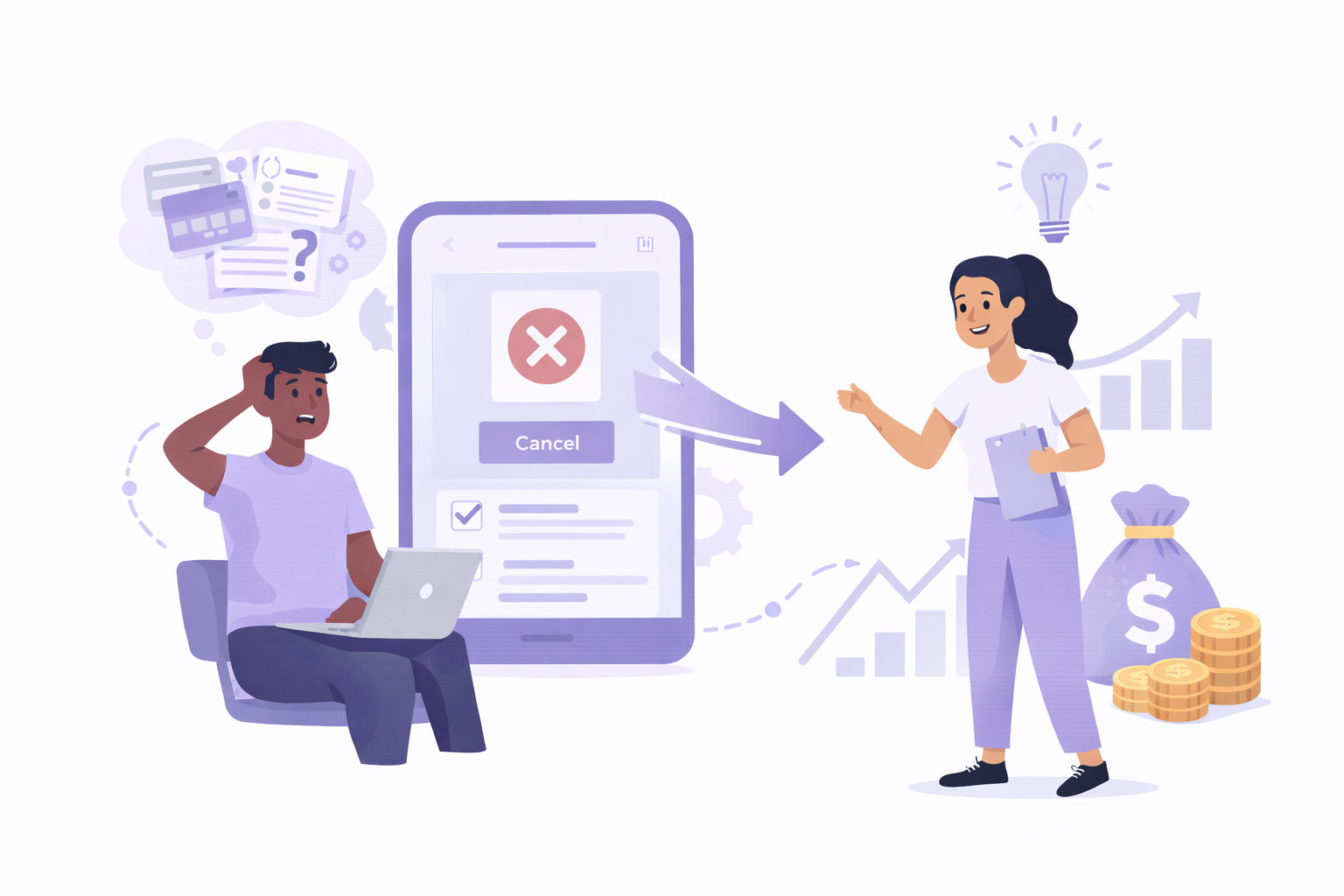
Homesite's post-purchase servicing platform became a critical pressure point when COVID-19 triggered an unexpected and sustained spike in policy cancellations. What had been a manageable volume of service requests suddenly became thousands of calls per day, each one a signal that the existing digital experience was failing to meet customer needs.
The financial and operational toll was immediate. At $18 per call, the cost structure was unsustainable. But more importantly, the volume itself raised a deeper question:
Were these customers genuinely leaving, or were they simply unable to find what they actually needed?
(Roles)
UX/UI Design Lead
(Research Method)
User Survey
Task Analysis
(Collaboration & Design Tools)
Figma
Miro Board
The Business Was Solving the Wrong Problem
The initial organizational response treated the cancellation spike as a churn problem, customers dissatisfied with their coverage, their price, or the brand. The remedies proposed were predictably retention-focused: discounts, outreach campaigns, and save attempts at the point of cancellation.
What the Business Assumed
Customers were churning due to dissatisfaction. The problem was a retention problem, requiring offers, incentives, and outbound save tactics.
What Was Actually True
Intent was entirely unknown. No data existed to distinguish dissatisfied customers from those with legitimate life-stage needs.
Cancellation Path Was Buried
The digital cancellation flow was difficult to find, because it was non-existent, forcing customers who could have self-served into the call center queue, inflating volume artificially.
No Visibility Into Intent
The platform captured zero structured data on why customers were canceling. Every exit looked identical in the system.
What We Thought vs. What We Found
Research revealed a fundamental misalignment between assumed churn motivations and actual customer drivers. The overwhelming majority of customers initiating cancellations were responding to life transitions, not dissatisfaction. Moving for better living conditions, career relocation, and family changes accounted for the top reasons. These are not churn signals; they are service routing failures.
Why customers were moving
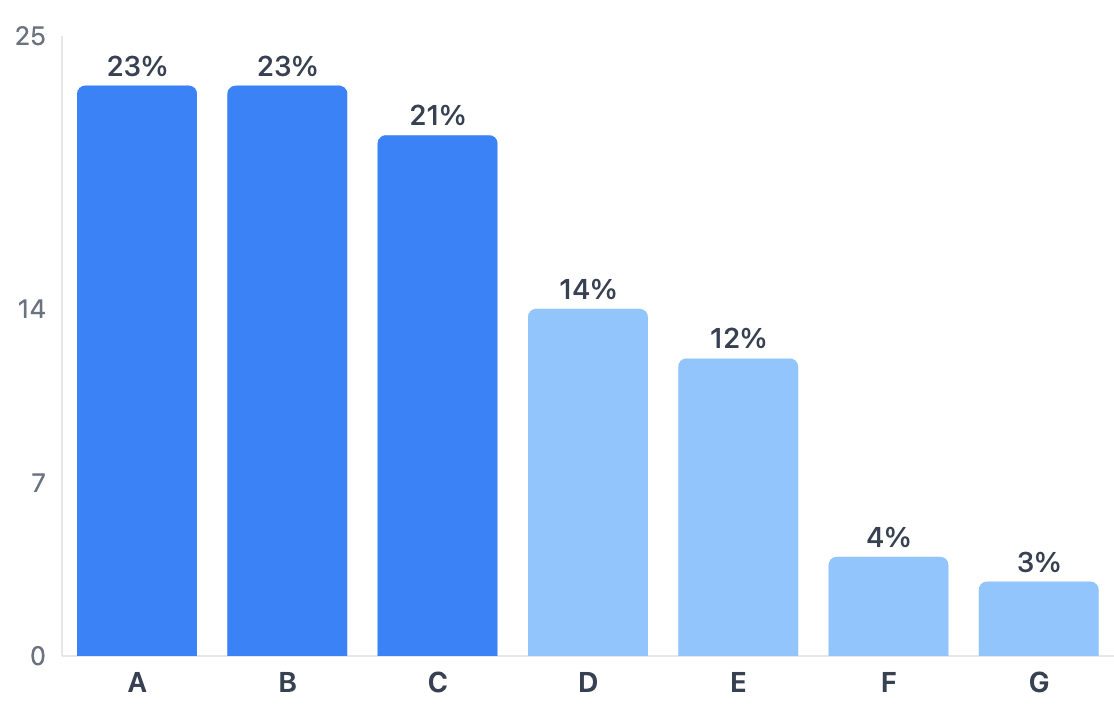
A - Livability (better living conditions)
B - Job and career relocation
C - Life transition / next chapter
D - Family-related move
E - New start/lifestyle change
F - COVID-specific reasons
G - Other
Customers Weren't Leaving, They Were Lost
The single most important finding of this research was that the cancellation flow was being used as a catch-all destination for customers with no other path available to them. Three distinct intent profiles were consistently misrouted into the cancellation queue.

Moving
Customers relocating to a new address needed a policy transfer or re-quote not a cancellation. No transfer path existed in the UI. Many secured coverage elsewhere before returning to cancel because no policy transfer or re-quote path existed within the servicing experience.
Homeownership Transition
Renters transitioning into homeownership often required policy conversion, re-quoting, or bundled coverage adjustments but the servicing experience treated these transitions as cancellations instead of customer progression opportunities.
Temporary Coverage
Some customers needed temporary coverage adjustments rather than permanent cancellation. This included seasonal and migrant workers relocating for harvest cycles, as well as students and non-traditional renters with short-term or transitional housing needs. However, the servicing experience offered no clear pathway for pausing, transferring, or re-engaging coverage based on temporary life circumstances.
The Journey Behind Cancellation
The journey map and service blueprint (next slide) together reveal a systemic failure across both the customer-facing interface and the back-office infrastructure. Friction was not limited to a single touchpoint; it was embedded throughout the service architecture, from the first search to the final resolution.
Where The System Breaks
Cancellation Service Blueprint: Back-office infrastructure failures and agent workarounds
Key Failure Points
No Transfer Option in UI
Customers with moving intent had no visible alternative to cancellation in the digital interface.Forced Into Cancellation
Customers who needed help with a life event were funneled into the cancellation path by default.Forced into a Call Center
With no self-service alternative, customers escalated to agents, inflating call volume and cost.Agents Compensating Manually
Because policy transfer and re-quote capabilities were unavailable within servicing, frontline agents relied on disconnected sales-platform tools to manually reroute customer intent, introducing operational inefficiencies, inconsistency, and scalability challenges.No Intent Data Captured
Every exit remained unstructured. The organization was flying blind with no way to learn or improve.
From Cancellation Handling → Intent Routing
Surface Intent Early
Introduce a dedicated moving path at the point of first inquiry, before the customer reaches the cancellation flow. Proactive routing prevents misclassification.
The strategic reframe was fundamental: stop treating cancellation as the terminal event, and start treating it as a signal of unmet need. The intervention shifts the platform's job from processing exits to understanding and routing intent, earlier, more accurately, and with structured data to learn from.
Support Intent Late
Within the cancellation flow itself, introduce reason-based branching that presents relevant alternatives and save attempts tailored to the customer's stated situation.
Capture Structured Data
Every interaction generates a structured reason code, building an intent, behavioral layer that enables continuous improvement and future personalization.
Design for life transitions, not transactions
The experience reframed servicing around customer context, moving, upgrading homes, or temporary relocation, rather than treating every change request as churn.
Reduce cognitive load during stress
The interface used conversational prompts, progressive disclosure, and plain-language terminology to support decision-making during high-stress moments.
Surface Alternatives Before Exit
Transfer, re-quote, and save quote pathways were introduced earlier in the journey to prevent customers from entering unnecessary cancellation flows.
Respect Customer Autonomy
The experience supported self-service cancellation when appropriate while introducing contextual retention opportunities based on customer intent.
Two Workstreams, One Unified Experience
The solution architecture addresses all two dimensions of the problem simultaneously: proactive intervention for customers with moving intent, reactive capability for customers who genuinely need to cancel, and a foundational data layer that makes both smarter over time.
Moving Path — Proactive
Policy transfer entry points were introduced directly within servicing navigation alongside core actions such as billing and claims, increasing visibility
Guided transfer flows provided step-by-step support for updating coverage and generating a re-quote at a new address
Enabled seamless re-quoting within servicing by integrating the quote routing experience directly into the platform, eliminating disconnected handoffs into external sales environments
Pre-filled customer and policy data to reduce friction, minimize rework, and shorten time-to-resolution
The Cancellation Flow — Reactive
Online cancellation introduced as a new self-service capability, removing the forced call center escalation
Reason-based routing presents contextually relevant alternatives based on the customer's stated intent
Save attempts integrated at the decision point, tailored to the specific reason selected
Introduced optional live-agent chat support for customers needing additional guidance, allowing users to resolve policy questions or transition concerns without leaving the servicing experience
Behavioral Insight Layer
Structured reason capture on every cancellation and transfer interaction, creating a clean, queryable intent dataset
Future opt-in capabilities informed by intent data, enabling personalized retention and re-engagement strategies
Introduced a future follow-up capability for customers with temporary or transitional coverage needs, allowing users to schedule personalized callbacks or reminders via phone or email directly within the servicing flow.
Prototype Walkthrough:
Moving / Re-Quote Flow
Guided customers from moving intent into transfer or re-quote options, using progressive disclosure and eligibility-based routing.
53-second walkthrough
Moving / Requote Flow Workflow Board
A static workflow board showing the moving path from entry point to completion, including address capture, policy transfer/re-quote logic, decision points, and key screen states across the flow.
Prototype Walkthrough: Cancellation / Intent Routing Flow
Shows reason capture, contextual save attempts, and completion path for true cancellation intent.
47-second walkthrough
Cancel Flow Workflow Board
A static workflow board showing the cancellation path from intent capture to completion, including reason selection, branching logic, date selection, mailing address confirmation, follow-up options, and final confirmation states.
Impact & Results
Measured Results Across Every Dimension
The redesigned experience delivered measurable impact across financial, operational, and customer retention metrics, validating the core hypothesis that intent routing, not friction, is the right intervention.
$4.3M in Sold Premium
(Sold premium associated with 7,560 retained customers).
6% Customer Retention Increase
(Increase in customer retention, securing $1.6 million in premium revenue).
$1.6M Premium Revenue Secured
(Premium revenue secured through increased customer retention).
7,560 Customers Retained
(Customers retained through the improved servicing experience).
360K+ Calls Redirected
(Call redirected from cancellation paths towards re-quoting, reducing customer service costs).
10% Opt-in Rate For Future Follow-Up Communications
(Demonstrating engagement beyond the immediate transaction and creating opportunities for ongoing customer communication).